There is no single answer to "how often should I bathe my dog?" A working farm dog rolling in mud every day and a sofa-loving Chihuahua live very different lives. The right schedule depends mostly on three things: your dog's coat type, their activity level, and whether they have any skin condition your vet is managing.
Most healthy pet dogs land somewhere between a bath every two weeks and every three months. If you are not sure where your dog sits, start at once a month, watch their skin, and adjust from there.
Bathing frequency by coat type
Your dog's coat is the biggest factor. The general rule: the more oil or hair a coat holds, the more it needs grooming attention, but not necessarily more shampoo.
| Coat type | Typical bath frequency | Why |
|---|---|---|
| Short & smooth (Boxer, Beagle) | Every 8–12 weeks | Low-maintenance; weekly brushing handles most dirt. |
| Double coat (Labrador, Husky) | Every 8–12 weeks | Bathing too often strips the insulating oils; rely on brushing to manage shed. |
| Long / silky (Shih Tzu, Golden Retriever) | Every 3–4 weeks | Long hair holds dirt and mats faster, so needs more frequent washes. |
| Curly / continuously growing (Poodle, Doodle) | Every 3–4 weeks | Hair keeps growing, so dirt accumulates; combine baths with regular clipping. |
| Hairless (Xolo, Chinese Crested) | Every 1–2 weeks | No fur to absorb oil, so the skin needs more frequent washing. |
| Oily or very active (Hounds, sport dogs) | Every 1–4 weeks | Skin oils and outdoor grime build up faster; wash as often as needed. |
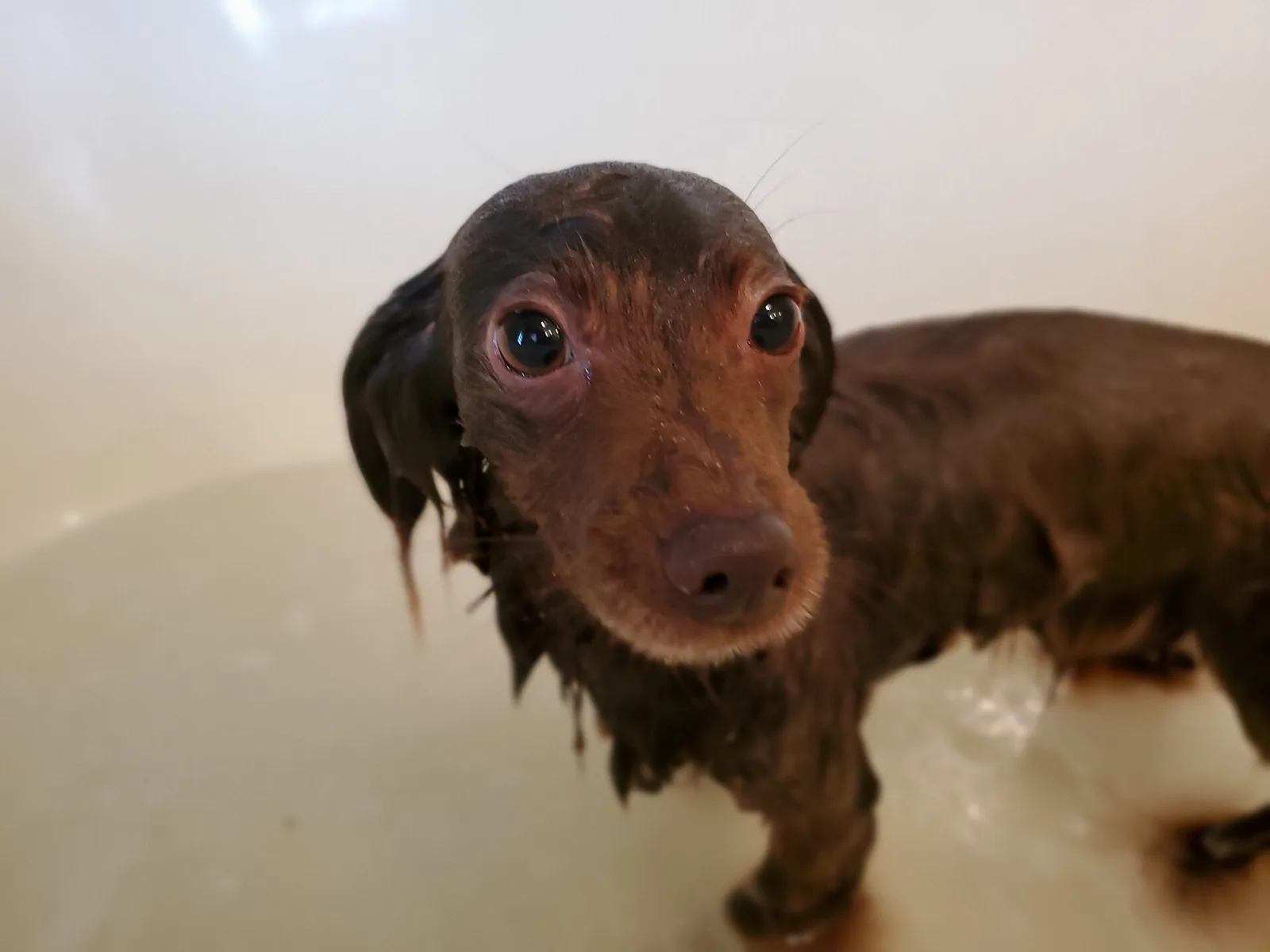
Puppies, seniors and skin conditions
Age and health change the answer too. Puppies generally don't need a bath until they are eight weeks old; before that, a warm damp cloth is plenty. Puppies also get messy, so occasional water-only rinses between real baths are fine.
For senior dogs or dogs with allergies, itchy skin, or a condition like seborrhea, your vet may recommend a specific product and schedule — sometimes as often as twice a week with a medicated shampoo. Never pick a frequency for a medical issue on your own; the wrong shampoo can make things worse.
Signs your dog needs a bath
You don't need to stick to a calendar. Trust the obvious clues:
- You can smell them across the room — that's the clearest signal.
- Their coat looks greasy or dull, or feels sticky to the touch.
- Visible dirt, mud or debris is stuck in the fur.
- They've been swimming in a lake or pond (rinse afterwards to remove algae and bacteria).
- Your vet told you to bathe them on a schedule for a skin condition.
Between baths: brushing does the heavy lifting
A bath is not a replacement for grooming. Brushing a few times a week removes loose fur, spreads natural oils and reduces the amount of dirt that ever reaches your tub. For double-coated dogs, regular brushing is genuinely more important than bathing — a good deshedding session keeps their skin healthy between washes.
How to bathe your dog safely (step by step)
- Brush first. Remove tangles and loose hair before the coat gets wet.
- Use dog shampoo only. Human shampoo has a different pH and can irritate canine skin. A gentle, soap-free or oatmeal formula is a safe default.
- Lukewarm water. Not hot, not cold. Check the temperature on your wrist like you would for a baby.
- Protect ears and eyes. A few cotton balls in the ears (remove after) and care around the face keep water out where it doesn't belong.
- Lather and rinse fully. Leftover suds are a top cause of itchy skin, so rinse until the water runs clear.
- Dry thoroughly. Towel dry first, then a low-heat blow dryer on a shy setting if your dog tolerates it. Damp coats and folded skin folds invite irritation.
If you bathe correctly, most dogs can be washed as often as needed without skin problems. The trouble usually comes from harsh shampoo or incomplete rinsing, not from the bath itself.
Bathing isn't the only grooming job
While you're building a bathing routine, don't forget the other basics: trim nails, clean ears gently and brush teeth. A regular routine also gives you a chance to check for fleas, ticks, lumps and sore spots — a few minutes of hands-on checking each week catches problems early.
Want to start your dog's care routine off right? Browse dog names for new arrivals, or explore our other care and grooming guides.
Frequently asked questions
Is it bad to bathe a dog every week?
For most healthy dogs, weekly baths with a gentle dog shampoo are fine. The risk is over-washing with harsh products, which dries the skin. Dogs with dry or sensitive skin, or double coats, may do better at longer intervals — let your dog's skin be the guide.
Can I use human shampoo on my dog?
No. Human shampoo is formulated for a more acidic skin surface and can irritate a dog's skin. Use a product made for dogs; if in doubt, a mild oatmeal or soap-free dog shampoo is a safe choice.
How often should I bathe a puppy?
Wait until about eight weeks old for a first full bath. Before that, clean with a damp cloth. After that, puppies can be bathed every few weeks or whenever they get messy, using a gentle puppy formula.
How do I get rid of the wet-dog smell?
Most of that smell comes from bacteria and yeast in the coat. A thorough wash with dog shampoo and complete drying removes it. Avoid letting your dog air-dry in damp weather, and keep ears dry — damp ears are the main source of the smell.
My dog hates baths. How do I make it easier?
Take it slowly: let them sniff the running water, use a non-slip mat so they feel secure, keep your voice calm, and reward calm behaviour with treats. Start with short, positive sessions before your dog ever needs a real wash. For many dogs, a warm towel straight from the dryer is the best part of the whole experience — end on that note.