A road trip with your dog should be fun — but too many owners head out with their pet loose in the back, which is one of the riskiest things you can do. An unrestrained dog isn't just a distraction: in a crash at 30 mph, a 20–30 kg dog is thrown forward with a force many times its own weight. It becomes a projectile that can injure you, your passengers, and itself.
The good news is that a little preparation turns a stressful car ride into a comfortable one. These are the essentials for keeping your pet safe, calm, and comfortable on the road.
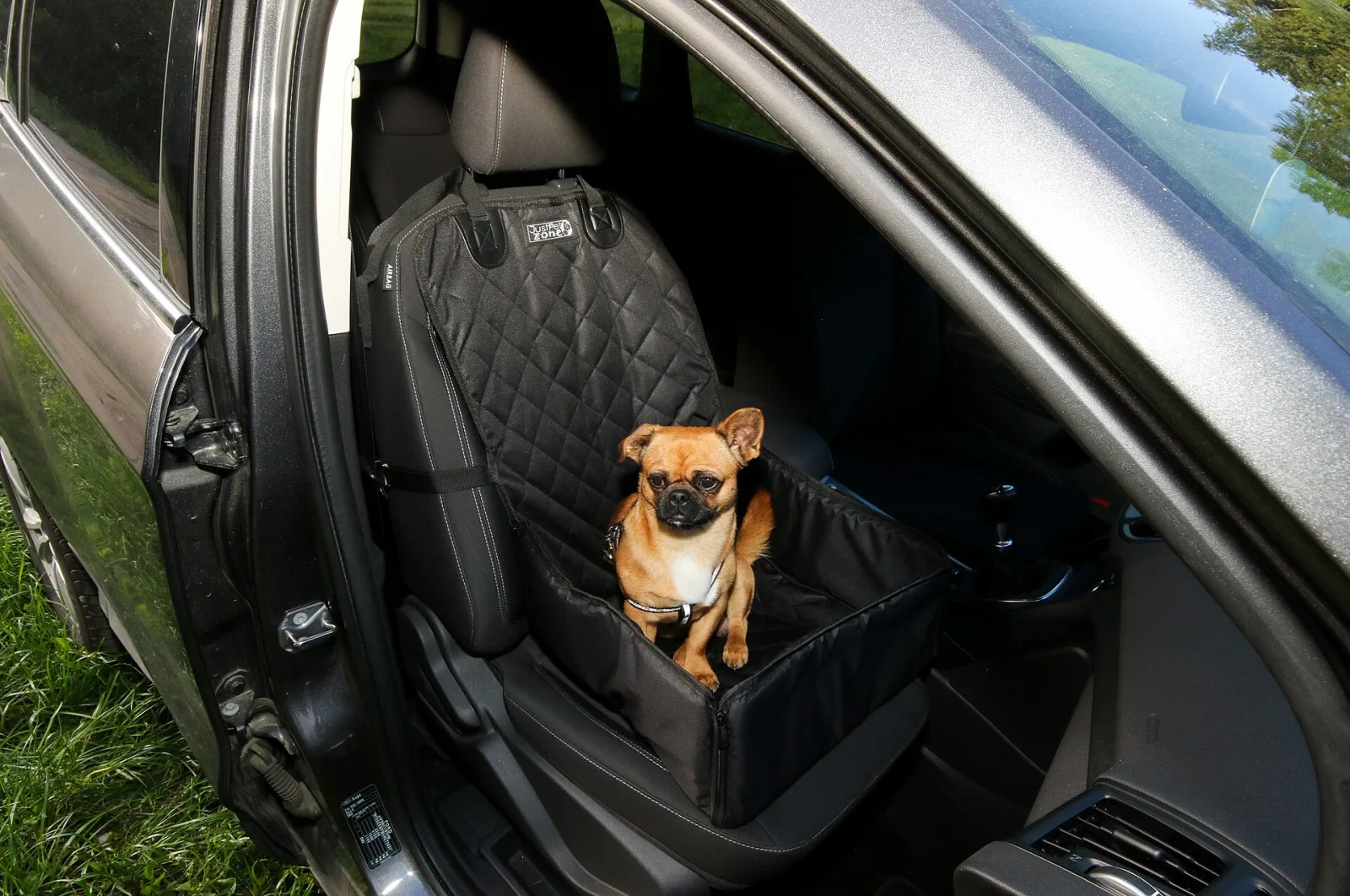
Secure your pet before you drive
The two safest options are a crash-tested harness attached to a seatbelt or a sturdy, crash-tested crate. Look for products certified by the Center for Pet Safety (CPS) — names like SleepyPod and Gunner Kennels have passed independent crash testing. Unlike human safety equipment, pet restraints aren't required to be crash-tested, so a cheap harness may offer little real protection.
- Harness + seatbelt: the harness must fit properly and let your dog stand, sit, or lie down without bracing during turns or braking.
- Crate or carrier: secure it with the seatbelt, cargo hooks, or straps so it can't slide or become a projectile itself.
- Hard-sided carrier for cats and small pets: never a collapsible wire crate — these can collapse or break open in an accident.
Never let your pet ride in the front passenger seat. Airbags are designed for people, not animals, and deployment can seriously injure a dog or cat. The back seat is the safest place.
Keep the windows closed
Letting your dog stick its head out of the window is a classic picture, but it's dangerous. Flying debris can injure the eyes, strong wind can damage ears, and a sudden stop or sharp turn can throw the dog out entirely. Keep windows mostly closed and use the air conditioning or a fan to keep the car cool instead.
Plan breaks every 2–3 hours
Just like humans, dogs need to stretch, relieve themselves, and drink water. Stop every two to three hours on long trips. Pick a park, a dog-friendly attraction, or a service station with a dog-walking area so the break is a real chance to move, not just a toilet stop. Keep cats and small pets in their carriers during stops — an open door is an escape route.
Before a long journey, give your dog a good walk or play session. A tired dog settles into a car ride far more easily than a wired one.
Handle motion sickness calmly
Many dogs, especially puppies, feel nauseous in the car. To reduce the risk:
- Avoid feeding a full meal for about 4–6 hours before travel.
- Offer small snacks or water during breaks instead of a big meal.
- Keep the car well ventilated and avoid heavy corners.
- If sickness persists even on an empty stomach, talk to your vet — there are safe medications that help.
For pets that struggle with car anxiety despite all this, your vet can suggest calming aids, pheromone sprays, or behavior advice. Sedation is rarely a good first choice, so ask before considering it.
Acclimation: start small, start early
Pets that aren't used to cars need practice, and some take weeks or even months to feel comfortable. Build the association slowly:
- Let your dog explore the parked car with treats and praise, no engine on.
- Go for a short ride — out of the driveway, down the street, to a nearby park.
- Gradually lengthen trips, always ending on a positive note.
- Make the destination fun (a park, a friend's house), so the car becomes a path to good things.
If you've never put your dog in the car before a long trip, that's the worst time to start. Practice trips in the weeks before.
Never leave a pet alone in a parked car
Even on a mild day, the inside of a parked car heats up fast — in the sun, the temperature can rise about 20°F (11°C) in just ten minutes. Cracking a window barely helps. On a 22°C day, a car can reach dangerous temperatures quickly, and brachycephalic breeds like Pugs and French Bulldogs overheat even faster. If you can't take your pet with you, leave it at home — not in the car, not "for just five minutes".
In hot weather, also travel in the early morning or late evening, offer water regularly (a non-spill bowl helps), and check the temperature in the back seat, which heats up faster than the front.
Pack a pet travel kit
| Essential | Why it matters |
|---|---|
| Crash-tested harness, seatbelt, or crate | Safety in the event of a sudden stop or crash |
| Water and a portable bowl | Hydration on stops and at your destination |
| Food (plus extra) and treats | Keep to your pet's usual schedule |
| Leash, collar with ID tag, up-to-date microchip | Prevents losing your pet at stops and hotels |
| Medications and medical records | Your vet's number and vaccination proof |
| First-aid kit | For minor injuries on the road |
| Waste bags and cleaning supplies | For accidents and stops |
| Blanket, bed, or favorite toy | Familiar smells reduce stress |
If you're staying overnight, check pet policies before booking — confirm fees, house rules, and safe walking areas. A crate or baby gate at the hotel gives your pet a secure corner and prevents damage in an unfamiliar room.
Safety, breaks, and familiarity: get those three right and your pet will learn that the car leads to good places.
Ready for more adventures? Explore our travel and adventure guides, or find a fitting name for your travel buddy with our dog name ideas.
Frequently asked questions
Do dogs need seatbelts in the car?
Yes — a dog should be secured in a crash-tested harness attached to the seatbelt, or in a secured crash-tested crate. An unrestrained dog is a distraction to the driver and becomes a dangerous projectile in a crash.
How often should I stop on a road trip with my dog?
Stop every 2–3 hours so your dog can stretch, relieve itself, and drink water. Longer trips need more frequent breaks for young, senior, or anxious dogs.
Can my dog ride in the front seat?
No. Airbags are designed for adults, not animals, and can seriously injure a pet on deployment. Keep your dog in the back seat, secured.
Is it OK to let my dog stick its head out the car window?
No — it risks eye injuries from debris, ear damage from wind, and your dog could fall or be thrown out during a sudden stop. Use air conditioning or a fan instead.
How do I help my dog that gets car sick?
Avoid feeding a full meal 4–6 hours before travel, keep the car well ventilated, and start with short trips. If sickness persists on an empty stomach, ask your vet about safe anti-nausea medication.