The first week with a new puppy sets the tone for everything that follows. It's not about teaching fancy commands — it's about building trust, starting simple routines, and getting the foundations right before bad habits form.
Puppies at 8–10 weeks old are in the most important window of their social development (roughly 3–14 weeks). Every positive experience now shapes the adult dog they become, so the goal of week one is simple: keep things calm, consistent and positive.
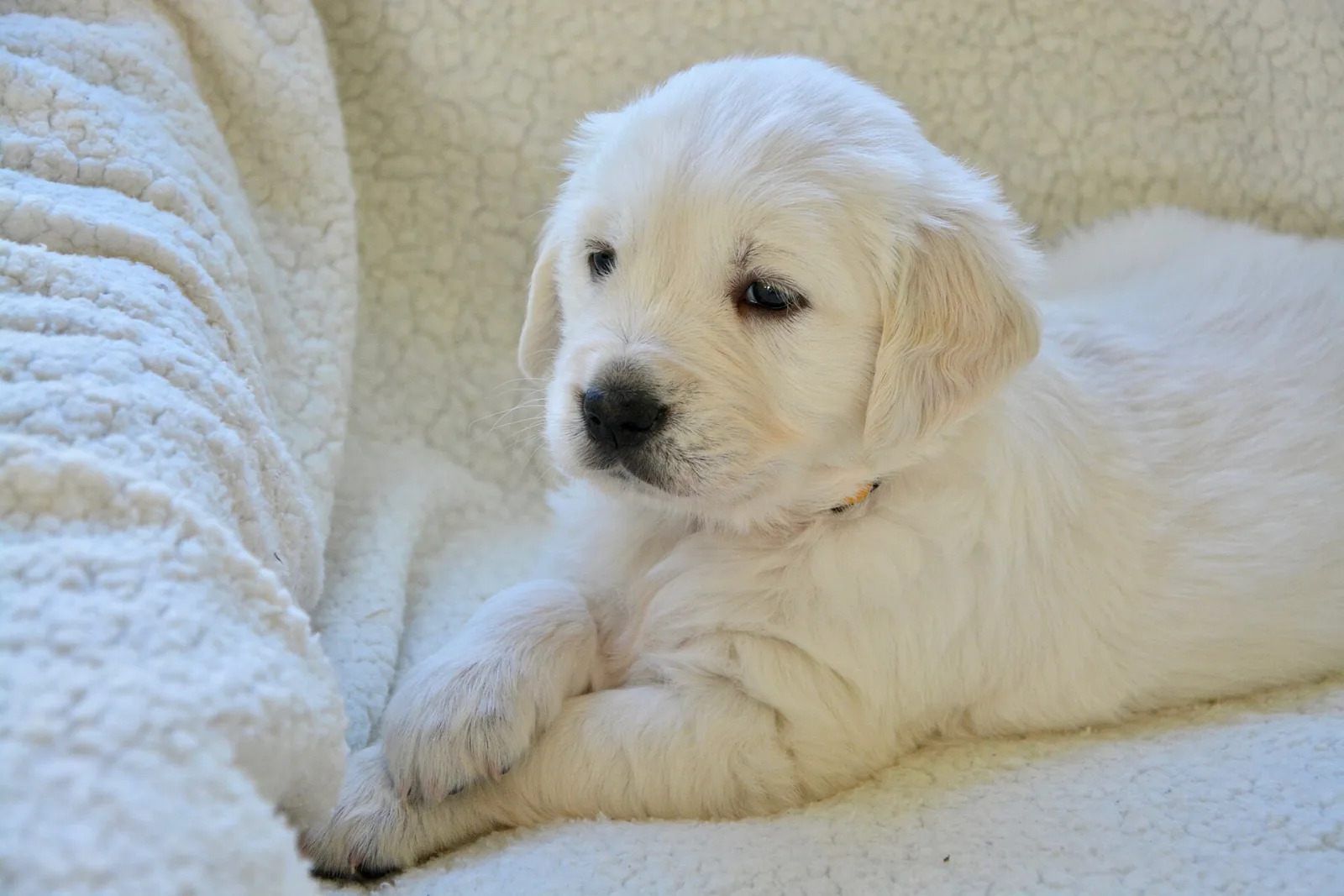
Set up a safe space first
Before your puppy arrives, prepare one quiet area — a crate, a pen, or a small puppy-proofed room. This is where they sleep, rest and spend unsupervised time. Make it comfortable with soft bedding and a chew toy. A worn item of your clothing inside adds a familiar scent that eases first-night nerves.
Keep the rest of the house off-limits at first. Let your puppy explore one room at a time so they never feel overwhelmed by too much space.
Start toilet training on day one
Young puppies need to go out every 60–90 minutes while awake, plus immediately after waking, eating, drinking and playing. Take them straight to the same spot every time, and reward successful trips immediately with calm praise and a small treat.
Expect accidents — they're part of the process. Clean them up with an enzymatic cleaner to remove the scent completely, otherwise the spot becomes an invitation. A puppy that can't hold their bladder overnight is not being stubborn; at this age it's simply not possible for them.
Keep training sessions short and playful
Puppies have short attention spans and need enormous amounts of sleep (16–20 hours a day). Two or three sessions of five minutes a day beat one long session every time. Focus on one thing at a time:
- Name recognition — say their name once, mark the moment they look at you with a cheerful "yes!" and a treat.
- Sit — hold a treat at the nose and move it slowly back over the head; the bottom drops naturally.
- Coming when called — use a happy tone and reward generously whenever they choose to come to you.
Never use their name to scold. Their name should always predict something good, or they learn to ignore it.
Introduce the crate gently
The crate should be a den, not a prison. Toss treats inside and let your puppy walk in and out freely, feed meals near or inside it, and only close the door for a few seconds at first while you're right there. Build up slowly — 30 seconds, then a minute, then five. Never use the crate as punishment, and never leave a young puppy inside longer than they can hold their bladder (roughly one hour per month of age).
Socialize safely (even before vaccinations finish)
Socialization doesn't mean meeting strange dogs. Until your vet confirms it's safe, expose your puppy to the world without ground contact:
- Different surfaces — carpet, tile, hardwood, grass, a yoga mat.
- Everyday sounds — vacuum, doorbell, traffic, gentle music, at low volume.
- Gentle handling — touch paws, ears, tail and mouth for a few seconds, then reward.
- Calm visitors — one or two relaxed, fully vaccinated people at a time.
Keep each new experience under a minute and stop the moment your puppy shows stress (tucked tail, lip licking, freezing). A few positive short experiences a day is plenty.
Expect the first nights to be rough
Whining on the first night is completely normal — your puppy just lost their littermates and their whole world. Keep the crate beside your bed so they can hear and smell you. When they cry, wait for a quiet pause, then take them out for a calm, boring toilet trip — no play, no fuss — and straight back to bed. Most puppies start sleeping longer stretches by the end of the first week.
Book the vet visit
Schedule a wellness check within the first few days. Bring the breeder or shelter records (vaccinations, deworming, microchip number), and note anything unusual about stool, appetite or energy. Catching issues early — parasites, kennel cough, loose stool from a food change — is far easier than dealing with them later.
Success in week one isn't a perfectly trained puppy. It's a puppy who trusts you, sleeps well, and has started learning your routines. Everything else builds on that.
Need a name for your new arrival? Browse our dog name ideas, or get more guidance in our training and behaviour guides.
Frequently asked questions
When should I start training my puppy?
Day one, but keep it simple. The first week is about name recognition, toilet routines and crate comfort. Formal commands like sit, stay and come naturally follow once your puppy is settled.
How often should I take my puppy out to potty?
Every 60–90 minutes while awake, plus after waking, eating, drinking and playing. A puppy can generally hold their bladder for about one hour per month of age, so don't expect them to last all night at first.
How much sleep does a puppy need?
Around 16–20 hours a day. An overtired puppy becomes bitey, hyperactive and unable to focus. If your puppy is suddenly manic, they almost certainly need a nap.
Is it normal for my puppy to cry at night?
Yes, especially the first few nights. Keep the crate near your bed, use a worn item of your clothing, and respond to crying with a calm, boring toilet break rather than attention or play.
Can I take my puppy out before vaccinations are complete?
Not to places where unknown dogs gather, until your vet says it's safe. But you can absolutely carry them outside to see, hear and smell the neighbourhood — that's valuable socialization without the risk.